Make Equity Your Motivation Engine: Lessons from TechCrunch Disrupt 2025
October 30, 2025
Ryan Husk
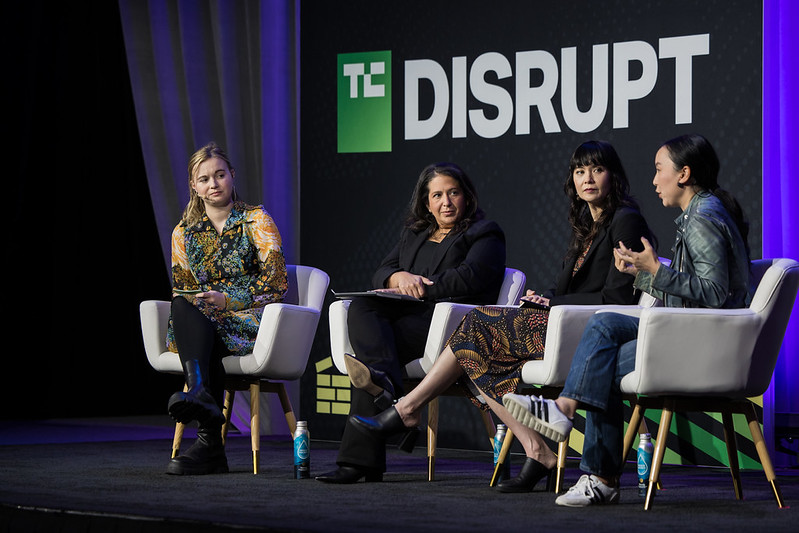
I had the privilege to attend TechCrunch Disrupt and watch Yin Wu , CEO & Co‑founder of Pulley, and the other panelists dig into one of the thorniest startup question of all: how much salary and equity should you really offer employees? Huge thanks to Yin Wu , Randi Jakubowitz (Head of Operations & Talent, 645 Ventures), and Rebecca Lee Whiting (Fractional General Counsel, Epigram Legal P.C.) for a conversation that was refreshingly tactical.
I attended as an observer, not a spokesperson. I'm not the expert, but want to relay what I heard and what stuck with me. Credit for the ideas goes to the speakers; any commentary (or bad jokes) is mine. For context, I lead partnerships at Pulley and I’m a former founder who has definitely over‑thought about equity and comp on a Sunday night.

It isn’t an offer; it’s an acquisition.
The moment that framed the whole discussion came early. Yin said the quiet part out loud: “You can’t compete with $250M salary. It isn’t an offer; it’s an acquisition.”
Translation: if your recruiting strategy is to out‑cash Big Tech, you’re speed‑running to a down round, or at least to a finance team that stops making eye contact with you. Startups don’t win on salary. They win on ownership, upside, and mission. That’s the mind shift that turns equity from a line on an offer letter into the engine of motivation.
Of course, “motivation engine” can’t mean vibes and vibes alone. The panel kept returning to the power of a simple, repeatable framework. Yin shared Pulley’s early rubric: 50th percentile cash, 90th percentile equity. It's more of a commitment to principle than a magic number. Be fair on cash, be aggressive on ownership, and be consistent.
Randi added the practical counterbalance every founder needs: if you scale up equity, scale down cash, and set clear goals so the company and the candidate both know what “success” looks like in the first six months. That discipline matters because while equity can sometimes feel like Monopoly money, it’s expensive currency with compounding consequences. Or, as Rebecca reminded us more than once, expensive currency with legal consequences if you do it wrong.
Two ghosts: Generosity and dilution
Which brings us to generosity and dilution, the two ghosts rattling chains in every founder’s head. Rebecca’s point landed squarely: the bigger dilution risk is usually investors, not employees. That doesn’t mean shower the whole team with stock like it’s parade confetti, although I can appreciate the appeal. It means be intentionally generous with the people actually building the company, especially early on. She anchored the norms: an option pool of 10–20% at the early stage is typical. For the first wave of engineers, Yin referenced a historical pattern many of us have seen (something like 4–3–2–1% for the earliest hires and roughly ~10% across the first 10 folks) while noting the obvious 2025 caveat: for exceptional AI talent, the alternative to joining "you" might be founding the next "you." In other words, calibrate to reality.
Generosity without structure, though, is how you end up explaining to your Series C board why your staff engineer owns more than your VP of Engineering. The panelists were adamant: build fairness into the system. Yin put it plainly: your comp strategy should not be a people‑based strategy. Create levels and ranges, then let candidates choose between two pre‑set flavors (cash‑heavier vs equity‑heavier) at the same level. That keeps flexibility (because life circumstances exist) without creating one‑off exceptions that metastasize into pay gaps and trust issues. People talk, especially about comp. Give them a story you’re proud to have repeated.
If you’re wondering where operational rigor fits, Randi and Rebecca provided the checklist most founders wish they’d had a year earlier.
- Offers should land with concrete OKRs and a plan to evaluate fit before the one‑year cliff; if it’s not working, don’t wait until 11:59 p.m. on cliff‑eve to have the hard conversation.
- On refreshers, Rebecca argued for front‑loading the core grant early, when the strike price is lower, and using smaller refresher grants (or promotion top‑ups) later as the company’s value grows.
- Yin echoed the retention angle: don’t over‑romanticize the mythical “savior hire.” Refresher discipline keeps your current A‑players engaged so your future A‑players have a reason to join them.
We can’t talk equity in 2025 without acknowledging the fine print. Rebecca’s legal hygiene list should be stapled to every founder’s laptop:
- Adopt a stock plan
- Get a 409A valuation before issuing options
- Consider early exercise and the 83(b) election
- Decide whether the very earliest folks should buy restricted stock instead of options
- California’s equal pay rules explicitly cover equity now—another reason to systematize levels and ranges rather than improvising at offer time. (Improvisation: great for jazz, less great for the wage‑and‑hour bar.)
- And for the love of Delaware, don’t copy‑paste forms that accidentally opt you into California law when you’re based in Texas.
The conversation also hit on acqui‑hires and the fragile social contract of startup equity. Yin described how certain acquisition structures can route around the cap table; that’s not hypothetical. Rebecca’s recommendation for ICs, single‑trigger acceleration, and for executives, double‑trigger. It’s a trust statement: if the company sells early, the people who built value should share it. Founders can’t guarantee outcomes, but they can be explicit about intent.
On geo‑pay, the guidance was blessedly un-dogmatic. You can pay one national rate or tier by location, but pick a policy and stick to it. Don’t over‑optimize to individual bargains you can’t scale. Use flexibility (hybrid work, sane meeting culture) as a benefit when cash is constrained. And if you’re benchmarking, benchmark to the role, not to the cheapest zip code you happened to hire from once.
If I had to compress the panel into a founder’s Monday‑morning plan, it would be this:
- Publish a simple rule (something like 50th cash / 90th equity)
- Model dilution across rounds so your generosity has guardrails
- Ship a two‑offer template that flexes cash vs equity without changing level
- Tie the offer to first‑six‑month goals, and do the legal basics before the first offer goes out.
None of that will win you a bidding war with a trillion‑dollar company—and that’s the point. You’re not competing in a salary war. You’re building a company where ownership is the motivation engine.
Again, big thanks to Yin Wu, Randi Jakubowitz, and Rebecca Lee Whiting for a conversation that made equity feel less like a mystical ritual and more like a system any disciplined founder can run. Design equity to be fair, clear, and meaningful, then run it with consistency. If you do that, the best people will accept your offers, but more importantly, they’ll act like owners once they arrive.
Pulley simplifies equity management - Cap tables, 409a valuations, SBC reporting, scenario modeling, SAFEs, RSUs, options, and more.

By subscribing you agree to our Privacy Policy.